On This Page
Engaging with Atheist Ideologies
"'Christian thinkers should not engage with the ideologies of atheists such as Marx.' Discuss."
Back to Paper 3 essays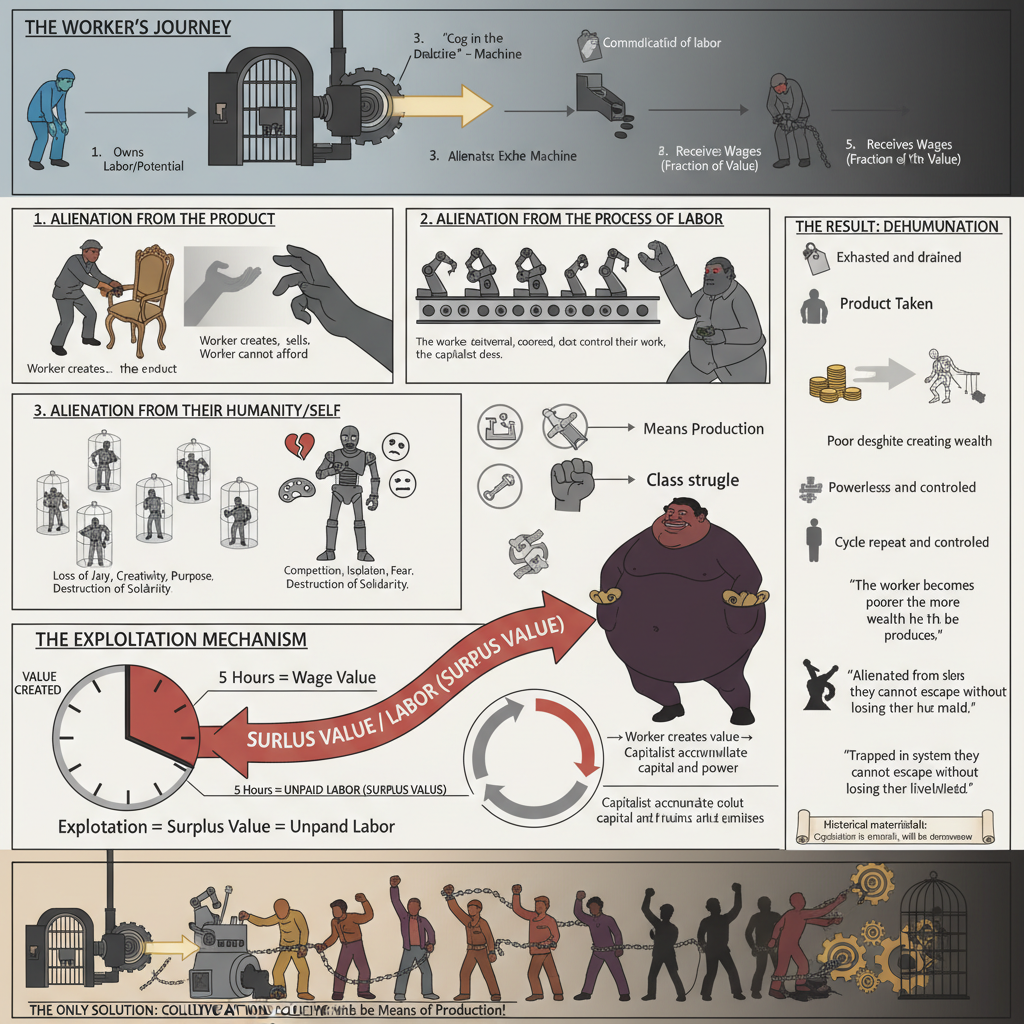
Introduction
The claim that Christian thinkers should not engage with atheist ideologies such as Marx's draws on a long tradition of theological separatism — the view that divine revelation is sufficient for Christian thought and that secular ideologies, particularly atheist ones, can only corrupt or distort the theological enterprise. Against this, liberation theology — most fully developed by Gustavo Gutiérrez in A Theology of Liberation (1971) and extended by Leonardo Boff, James Cone, and others — argues that Marx's analysis of capitalism, exploitation, structural sin and class dynamics provides an analytical tool that enables Christians to understand the causes of poverty and injustice more adequately than they could without it. The OCR specification frames this as a central debate: "whether or not Christian theology should engage with atheist secular ideologies" — acknowledging that the question is live and contested within the tradition. The claim must be assessed against: the theological separatist tradition; the methodological distinction between using Marx as an analytical tool and adopting Marxism as a comprehensive worldview; the Vatican's concern that liberation theology imports Marxist presuppositions that distort Christian categories; and the broader principle, established across Christian intellectual history, that Christian thinkers have consistently and productively engaged with non-Christian and atheist thought. I will argue that the claim is not convincing: Christian intellectual history demonstrates that engagement with non-Christian thought is not only permissible but has been essential to the tradition's development, the methodological distinction between analytical tool and comprehensive worldview is defensible, and the blanket ban on engagement with atheist ideologies would produce a Christianity incapable of addressing the real causes of injustice that the Gospel requires it to confront.
Mark-scheme aim
PECREL 1 — The case for engagement: the Aquinas-Aristotle precedent and Marx as analytical tool
Christian intellectual history demonstrates that engagement with non-Christian and atheist thought is not only permissible but has been one of the tradition's most productive intellectual strategies — and the liberation theology use of Marx as an analytical tool is a direct continuation of this tradition.
The most powerful precedent against the separatist claim is Aquinas' engagement with Aristotle: Aristotle was not a Christian — his cosmology, metaphysics and ethics were developed within a pagan Greek philosophical framework — and yet Aquinas drew extensively on Aristotle's natural law, teleology and virtue ethics to construct the most comprehensive theological synthesis in the Western tradition. If Christian thinkers should not engage with the ideologies of non-Christians, Aquinas' entire Summa Theologica would have been illegitimate — which is a reductio ad absurdum of the separatist claim. Liberation theologians make exactly this argument: as the alevelphilosophyandreligion.com notes confirm, "liberation theologians argue that there is no incoherence for Christians in being influenced by Marx" — just as Paul used Greek philosophical concepts (logos in John 1, Stoic categories in his letters) and Aquinas used Aristotle, Gutiérrez uses Marx as an analytical tool for understanding the social mechanisms of poverty and exploitation. The specific Marxist tools that liberation theology employs are: the analysis of alienation (workers are separated from the fruits of their labour and their own humanity through capitalist production), structural sin (sin is not only personal but embedded in unjust social systems — capitalism, colonialism — that systematically oppress the poor), praxis (theological reflection must begin from and return to transformative action in the world, not merely theoretical contemplation), and the class dynamic (the powerful use ideology to legitimate their position, and theological critique must expose this). As the philosopherkings.co.uk notes confirm: "Gutiérrez used Marx implicitly whilst Leonardo Boff and José Miranda used him more explicitly — they showed how Marxist analysis could highlight the mechanisms of exploitation that cause the poverty the Gospel demands Christians address."
However, the Vatican's 1984 Instruction on Certain Aspects of the Theology of Liberation provides the most theologically serious objection: it does not argue that engagement with Marx is inherently forbidden but that uncritical adoption of Marxist categories creates a "disastrous confusion between the 'poor' of the Scripture and the 'proletariat' of Marx" — transforming the theological category of the poor (those to whom God shows special compassion) into the Marxist category of a revolutionary class whose liberation comes through class struggle. The Gospel Coalition's analysis reinforces this: "by presupposing Marxism, cut themselves off from serious discussion about the best way to aid those trapped in poverty, leaving only violence as the means of settling the question." The specific Marxist presupposition that is theologically problematic is historical materialism — the claim that all social relations are determined by economic forces — which is incompatible with the Christian account of human beings as spiritual creatures whose ultimate liberation is from sin rather than from economic structures.
Liberation theologians respond that the Vatican's concern correctly identifies a danger but does not establish that engagement is impermissible — only that it must be critical rather than wholesale. Gutiérrez himself did not identify as a Marxist-Leninist and remained a committed Roman Catholic: he used Marx's analytical categories to understand social structures while grounding his theological conclusions in Scripture, the prophetic tradition, and the preferential option for the poor — which are authentically biblical rather than Marxist categories. The Seneca notes confirm the key distinction: "this idea is important because it helps liberation theology to combat the charge that it relies too heavily on an atheistic analysis — Gutiérrez's preferential option for the poor is ultimately grounded in Luke 4:18 and Amos rather than in Marx."
The analytical tool distinction is defensible and historically well-grounded: just as the fact that Aristotle was a pagan did not make Aquinas' use of his categories illegitimate, the fact that Marx was an atheist does not make Gutiérrez's use of his social analysis illegitimate — provided the theological foundation remains Scripture and tradition rather than Marxist ideology. The Vatican's concern is a valid warning about the risk of uncritical adoption, not a condemnation of engagement as such. The claim that Christian thinkers should not engage with atheist ideologies at all would have prevented not only liberation theology but the entire tradition of Christian philosophy — which has consistently engaged with Plato, Aristotle, Descartes, Kant and Hegel, none of whom were orthodox Christians.
The Aquinas-Aristotle precedent and the analytical tool distinction together establish that engagement with atheist thought is both historically legitimate and theologically defensible — making the blanket prohibition in the title unconvincing.
Mark-scheme aim
PECREL 2 — The separatist case, the Vatican's theological objection, and the limits of Marxist analysis
The theological separatist case has genuine force as a warning against the specific dangers of Marxist presuppositions — but even its strongest form concedes that critical engagement is both necessary and legitimate, rather than establishing total prohibition.
The strongest form of the separatist case is theological rather than merely cultural: Barth's position (discussed in earlier topics) holds that Christian theology must be grounded in the revealed Word of God alone and that any engagement with secular ideologies risks allowing those ideologies to set the agenda for theological reflection rather than allowing revelation to do so. Applied to liberation theology, this produces the Gospel Coalition's critique: "the liberationists demand that commitment to Marxist revolution is the presupposition of the theological task… thus the word of God is silenced on the central tenets of liberation theology where it ought to speak the loudest." The specific theological damage the separatist identifies is: first, the transformation of orthopraxis (right action) into a Marxist-defined praxis of class struggle, replacing theological reflection with political activism; second, the substitution of class liberation for the Gospel's account of salvation from sin and death — what the poor need, on the Marxist account, is economic liberation, while the Gospel proclaims they need reconciliation with God; and third, the empirical failure of Marxist-influenced regimes — Gutiérrez "glamorized Marxist revolutions in Cuba and Nicaragua, whose poverty and repression exponentially exceeded problems in capitalist countries."
However, the separatist case proves too much: taken consistently, it would require Christian thinkers to engage with social problems only through the categories available in Scripture and the pre-modern tradition — which are not sufficient to analyse the specific mechanisms of 21st-century global capitalism, structural inequality and colonial economic exploitation. The Gospel commands Christians to care for the poor (Matthew 25, Amos, Luke 4) — but caring effectively for the poor in a world structured by global financial systems, corporate supply chains and geopolitical power requires analytical tools that go beyond what first-century Palestinian agricultural metaphors can directly provide. The OCR specification itself confirms this: liberation theology's specific contribution is the identification of structural sin — sin embedded in systems rather than only in individuals — which is a genuine theological development that draws on but is not reducible to Marx.
The separatist can respond that the Gospel's mandate to care for the poor does not require adopting a specific economic analysis — the Church can identify poverty as wrong and call for justice without adopting Marx's specific account of why poverty exists and how it is to be solved. Natural law, Scripture and tradition together provide sufficient resources for identifying injustice without importing atheist analytical frameworks that carry incompatible metaphysical commitments.
The separatist response is theoretically available but practically inadequate: natural law and Scripture identify poverty as wrong but do not by themselves identify the specific mechanisms of contemporary economic exploitation that would need to be addressed to change the situation — which is precisely what Marx's social analysis provides. The studyrocket.co.uk notes confirm the key distinction between using Marxist analysis and adopting its ultimate aims: liberation theology "views the poor as a group to be protected and assisted, not a means to an end" — unlike Marxism, which instrumentalises the proletariat for the revolutionary project. The most defensible position is that Christian thinkers should and must engage with atheist ideologies including Marx — critically, selectively, and with theological grounding firmly in Scripture and tradition — but should not adopt them wholesale as presuppositions.
The separatist case correctly identifies the risks of uncritical adoption but establishes a warning rather than a prohibition — the difference between critical engagement and uncritical adoption is the key distinction that the title's absolute claim fails to make.
Mark-scheme aim
Conclusion (RJ)
The claim that Christian thinkers should not engage with the ideologies of atheists such as Marx is not convincing. The history of Christian intellectual engagement — Paul's use of Stoic categories, Aquinas' use of Aristotle, Augustine's use of Plato — demonstrates that engagement with non-Christian and atheist thought is not a betrayal of the tradition but one of its most productive intellectual strategies. Liberation theology's use of Marx as an analytical tool — to identify the structural causes of poverty, the mechanisms of alienation and exploitation, and the systemic character of social sin — is a legitimate continuation of this tradition, provided the theological foundation remains Scripture and the preferential option for the poor rather than Marxist historical materialism. The Vatican's 1984 warning about the "disastrous confusion" between Scripture's poor and Marx's proletariat correctly identifies the risk of uncritical adoption — and Gutiérrez's romanticisation of Cuba and Nicaragua shows this risk is real. But the appropriate response to this risk is critical engagement rather than total prohibition — and a Christianity that refuses to engage with the best available analytical tools for understanding and addressing the structural causes of poverty would be incapable of fulfilling the Gospel's own mandate to the poor.