On This Page
Feminine Terms for God
"Discuss the view that using feminine terms for God is unnecessary."
Back to Paper 3 essays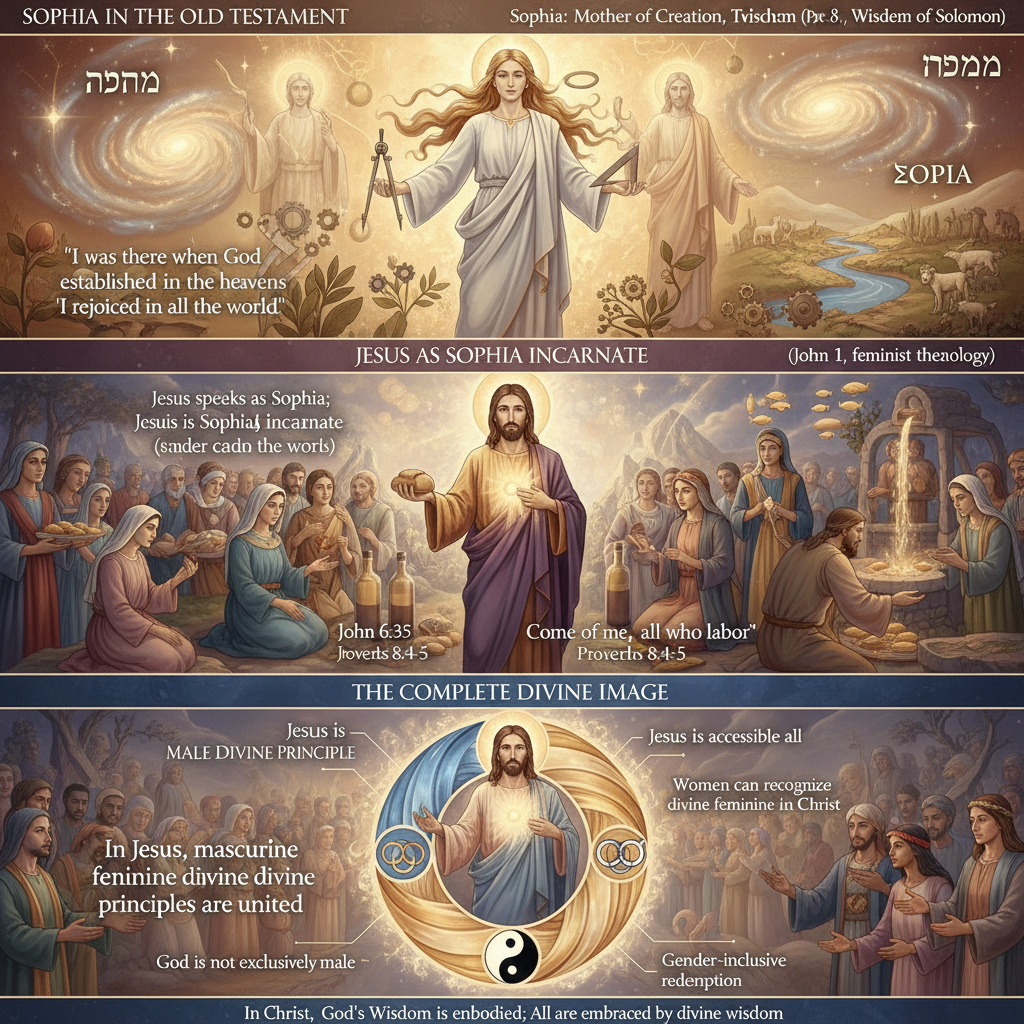
Introduction
The claim that using feminine terms for God is unnecessary raises three interconnected questions: whether the Christian tradition has historically and legitimately used such terms; whether the exclusive use of masculine God-language distorts the tradition's own understanding of God's nature; and whether the theological and pastoral consequences of exclusively masculine language justify the use of feminine alternatives. The conservative case for the view rests on three pillars: Jesus addressed God as "Father" (Abba), the second person of the Trinity was incarnate as male, and the biblical tradition's normative use of masculine pronouns and titles for God is sufficient and appropriate theological language. The feminist theological case against the view — most fully developed by Ruether and partially by Daly — holds that exclusively masculine language for God is not neutral but carries ideological weight: it perpetuates a male-centred understanding of divinity that has systematically marginalised women and distorted the tradition's own richer account of God. The OCR specification identifies this as a live debate about language, theology and equality. I will argue that the view is not convincing: feminine terms for God are not merely politically motivated impositions but are grounded in Scripture, the apophatic tradition, and the theological requirement that God-language not be reduced to a literal description of a gendered Being — making their use both justified and necessary for theological accuracy.
Mark-scheme aim
PECREL 1 — The conservative case and the biblical foundation of masculine God-language
The conservative case for the sufficiency of masculine language has genuine biblical grounding — Jesus' own practice and the normative tradition — but conflates the pedagogical preference of Jesus' Abba address with a metaphysical claim that God is literally male.
The conservative case rests on three strong points. First, Jesus' practice: throughout the Synoptic Gospels and John, Jesus consistently addresses God as Abba (Father), presents his own relationship with God in terms of Son-Father intimacy, and teaches his disciples to pray "Our Father" (Matthew 6:9). Second, incarnational maleness: the second person of the Trinity was incarnate as a male human being — Jesus of Nazareth — which the complementarian tradition takes as theologically significant: if God chose to reveal himself in a specific male human being, then masculine language for God is not arbitrary but revelatory. Third, the normative tradition: the entire Christian theological tradition, from the Church Fathers through Aquinas to the present, has used masculine pronouns and titles — Father, Lord, King, He — for God, and the sufficiency of this tradition for two millennia is itself an argument for its adequacy. As the Chase Terrace notes confirm: "Christianity should not abandon the male language used for God" — the tradition's normative use is both scripturally grounded and historically embedded.
However, the conservative case fundamentally conflates analogical and literal predication of gender to God. As Ruether argues, the apophatic tradition — from the Cappadocian Fathers through Aquinas — has always maintained that God is beyond all language, and that human terms for God (including Father, King, Lord) are analogical rather than literal: they point towards God's reality without capturing it. If God is literally male — possessing the biological and psychological attributes of human maleness — then the Christian doctrine of divine transcendence is violated: God becomes a gendered Being among others rather than the ground of all being. Elizabeth Achtemeier's conservative concern — that calling God mother immediately introduces the image of birth and suckling, blurring the Creator/creation distinction — is a legitimate pastoral worry, but it applies equally to masculine terms: calling God "Father" introduces the image of human paternity with its own limitations and cultural associations. Virginia Mollenkott responds directly: "the language of mother does not negate God's transcendence but instead accents the biblical paradox of God's immanence and transcendence."
The conservative can respond that Jesus' use of Abba is not merely analogical but revelatory: God has specifically chosen to reveal his personal character through the Father-Son relationship, and this is not simply one cultural metaphor among others but the normative framework established by the Incarnation itself. Changing God-language is therefore not merely a matter of cultural preference but risks obscuring the specifically revealed character of God as disclosed in Christ.
The revelatory response has genuine theological weight — Jesus' Abba address is not simply one cultural preference among others. However, it does not establish that exclusive masculine language is necessary or sufficient: the revelation of God as Father in the Son does not preclude the simultaneous use of other terms — including feminine ones — that capture different dimensions of God's relationship with creation. The apophatic tradition's insistence that God transcends all human language means that the exclusive use of masculine terms, far from being theologically accurate, risks the idolatry of treating a pedagogical preference as a literal description.
The conservative case is grounded in Jesus' practice and the normative tradition, but its conflation of analogical and literal predication means it does not establish that feminine terms are unnecessary — only that masculine terms have a normative and revelatory foundation.
Mark-scheme aim
PECREL 2 — The biblical basis for feminine terms, Sophia, and the idolatry of exclusive masculinity
The biblical evidence for feminine God-language — Isaiah's maternal imagery, Sophia, the feminine ruach — and Ruether's idolatry objection together demonstrate that feminine terms are not only not unnecessary but theologically required for an accurate account of the tradition's own God-language.
The biblical basis for feminine God-language is more extensive than the conservative tradition has acknowledged. Isaiah 42:14 — "I will cry out like a woman in labour" — presents God explicitly using feminine birth imagery for himself; Isaiah 49:15 — "Can a mother forget the baby at her breast? Though she may forget, I will not forget you!" — makes maternal love an analogy for God's steadfast covenant faithfulness. The Sophia (wisdom) tradition in the Hebrew Bible and Apocrypha presents divine wisdom (hokhmah in Hebrew, sophia in Greek) as a feminine figure who participates in creation (Proverbs 8), accompanies Israel through history (Wisdom of Solomon), and is identified in the New Testament with the pre-existent Christ (1 Corinthians 1:24 — "Christ the power of God and the wisdom of God"). The Hebrew word for God's Spirit — ruach — is grammatically feminine, and the concept of divine indwelling (Shekinah in Jewish tradition) is also feminine. As the OCR mark scheme confirms: "Ruether argues that there has always been a feminine element and understanding of God which certain strands of Christianity have not lost and which can therefore be developed to overcome sexism in the Church." Ruether's broader theological argument is that exclusively masculine God-language is not merely incomplete but idolatrous: it treats one set of human gender metaphors as if they were a literal description of God's nature, which violates the apophatic principle that God transcends all human categories.
However, the Daly critique pushes further: even feminist use of feminine God-language — calling God "Mother" or invoking Sophia — risks reinscribing gender stereotypes rather than transcending them. If masculine God-language perpetuates male dominance by associating God with maleness, then feminine God-language risks perpetuating a different set of gender stereotypes — the nurturing, life-giving, immanent feminine divine — that ultimately reinforces rather than challenges the binary gender framework. Daly's own solution — God as Verb/Be-ing, beyond all gendered terms — attempts to transcend the problem entirely rather than substituting one gendered language for another. The studyrocket.co.uk notes confirm: "while some feminist theologians warn against simply replacing a male God with a female Goddess (as this may reinforce gender stereotypes), others argue that rediscovering female images of the Divine can be a transformative and empowering process."
Ruether responds that the stereotyping objection, while real, does not establish that feminine God-language is unnecessary — only that it must be used carefully, alongside masculine terms, in a corrective and complementary rather than substitutive way. The point is not to replace "Father" with "Mother" but to prevent the literalisation of masculine terms by demonstrating that the tradition itself uses feminine imagery — which shows that neither gender has a privileged literal relationship to the divine. Furthermore, the pastoral necessity of feminine God-language is practically demonstrated: women who have experienced religious communities in which God is exclusively male report a systematic sense of exclusion from the divine that has real spiritual and psychological consequences.
Ruether's response is both theologically and pastorally compelling: the biblical evidence for feminine God-language is substantial and cannot be dismissed as a modern imposition, the apophatic tradition requires that no single set of metaphors be treated as literal, and the pastoral evidence of women's exclusion from a male-dominated God-language is a real theological problem. Daly's concern about reinforcing gender stereotypes is genuine but does not establish that feminine terms are unnecessary — it establishes that they must be used thoughtfully. The most defensible verdict is that using feminine terms for God is not unnecessary but theologically required: required by the tradition's own scriptural evidence (Isaiah, Sophia, ruach), required by the apophatic principle (no single gender metaphor can be literal), and required by the pastoral imperative of addressing the exclusion of women from an exclusively masculine theological imagination.
The biblical evidence, the apophatic tradition, and Ruether's idolatry objection together demonstrate that feminine terms are theologically necessary rather than unnecessary — making the view that they are unnecessary unconvincing.
Mark-scheme aim
Conclusion (RJ)
The view that using feminine terms for God is unnecessary is not convincing. The conservative case — grounded in Jesus' Abba address, the incarnational maleness of Christ, and the normative masculine tradition — correctly identifies the primary and revealed character of Father-Son language in Christian theology, which must not be carelessly discarded. However, it conflates analogical and literal predication, treating a revelatory pedagogical preference as if it were a claim that God is literally male — which violates the apophatic tradition that God transcends all human language including gender. The biblical tradition's own use of feminine God-language — Isaiah's maternal imagery, the Sophia wisdom tradition, the feminine ruach — demonstrates that feminine terms are not a modern feminist imposition but a recovery of the tradition's own richer and more theologically accurate account of the divine. Ruether's idolatry objection is decisive: the exclusive use of masculine terms treats one set of gender metaphors as literal, which is the specific theological error that the apophatic tradition has always identified as idolatry. Feminine terms are therefore not unnecessary but required — required by Scripture, required by the apophatic tradition, and required by the pastoral imperative of theological language that reflects the full humanity of those made in the image of a God who transcends all human gender.