Non-Voluntary Euthanasia: Decision by Others
Summary
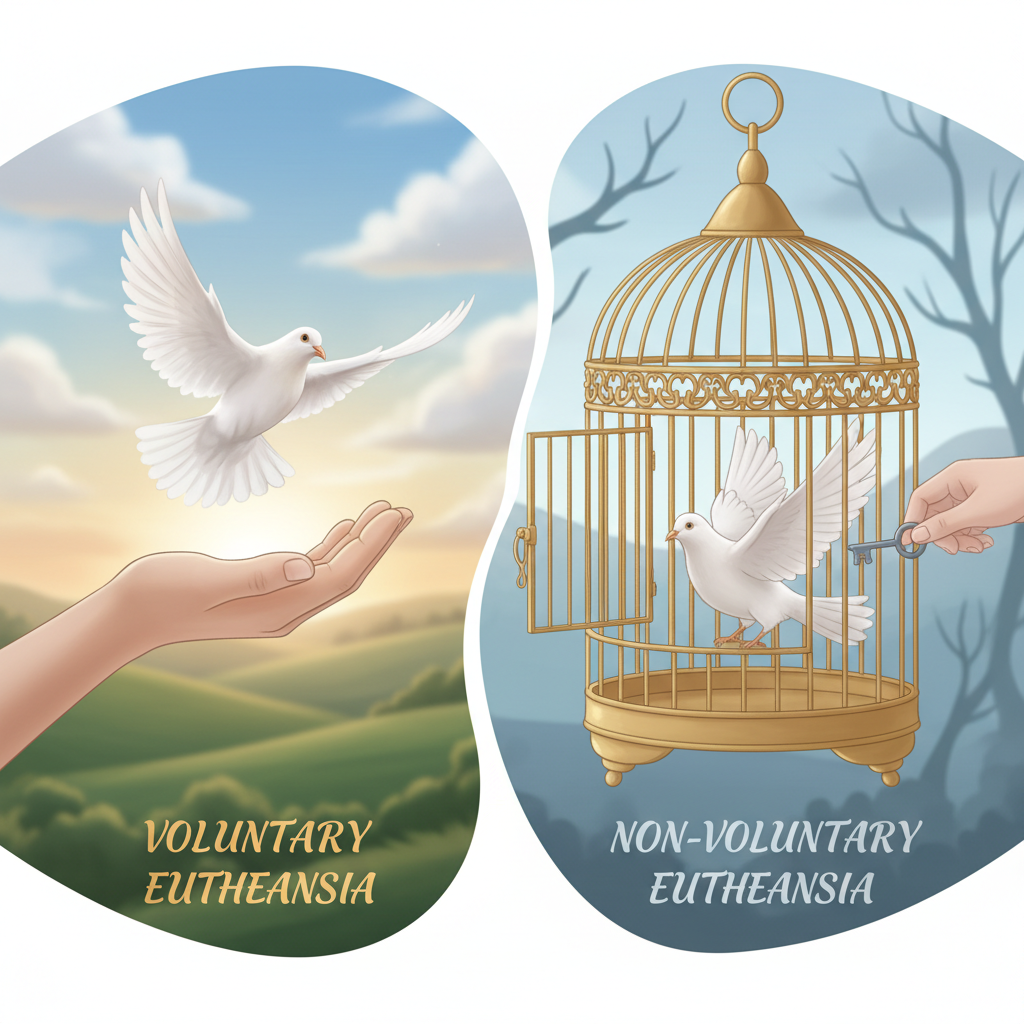
Non-Voluntary Euthanasia is ending someone's life without their explicit consent, because they cannot give it—usually because they are in a coma, persistent vegetative state (PVS), have severe brain damage, or are infants. Unlike voluntary euthanasia (they ask to die) or involuntary (killing against their will), this involves someone else deciding it is in the person's "best interest" to die. Jonathan Glover argues that if a person has no consciousness, killing them is not wrong because the body is just an"instrument" for conscious experience. Peter Singer extends this to severely disabled infants, arguing they lack personhood and have no interest in continuing to live. Proponents say it ends pointless suffering; opponents warn it creates a "slippery slope" where vulnerable people are deemed "not worth keeping alive".
Detailed Explanation
What is Non-Voluntary Euthanasia?
Definition
The termination of a person's life without their explicit consent, where the decision is made by another person (doctor, family member, or legal guardian) who believes it is in the patient's best interest.
Key Distinctions
Voluntary
"I want to die" (competent adult requests it).
Non-Voluntary
"I can't say" (person is unconscious, incompetent, or an infant).
Involuntary
"I want to live" (killing against their will—this is murder).
Common Cases for Non-Voluntary Euthanasia
Persistent Vegetative State (PVS)
A person is awake but not aware. Their brain stem functions (breathing, heartbeat) but their cerebral cortex is destroyed. They have no consciousness, thoughts, or feelings.
Severe Brain Damage
A person has minimal consciousness but cannot communicate their wishes. They may experience pain but cannot express preferences.
Severely Disabled Infants
Babies born with conditions like spina bifida, severe cerebral palsy, or Tay-Sachs disease who will live short, painful lives with no possibility of meaningful existence.
Severe Dementia
Advanced Alzheimer's patients who have lost all sense of self, memory, and relationships. They cannot make informed decisions.
Jonathan Glover's Consciousness Criterion
The Argument
Glover argues that being alive is not enough for life to be valuable.
The Body as Instrument
- The body is merely an instrument that enables conscious experience.
- If the instrument is broken (no consciousness), the body has no value.
Implication
If a person has no consciousness (PVS) or minimal consciousness (severe brain damage), ending their life is not wrong.
Problem
- What about people with reduced consciousness (dementia, brain injury)?
- Where do we draw the line?
Peter Singer's Personhood Argument
The Argument
Singer uses preference utilitarianism: what makes killing wrong is frustrating the victim's preference to continue living.
Non-Voluntary Cases
- A PVS patient has no preference (they are not conscious).
- A severely disabled infant has no concept of life/death and cannot form preferences.
Implication
Since their preferences are not frustrated, ending their lives does them no harm. In fact, it prevents suffering, which is a positive good.
Controversial Conclusion
Singer argues that some severely disabled infants have lower moral status than animals. If we would euthanize a suffering animal, we should euthanize a suffering infant with the same condition.
The "Best Interests" Standard
Medical Ethics Approach
When a patient cannot decide, doctors must act in the patient's "best interests".
How to Determine Best Interests
Substituted Judgment
What would the patient have wanted if they could decide?
Objective Standard
What would a reasonable person want in this situation?
Quality of Life
Is the patient's quality of life so poor that continuing life is not beneficial?
Example
A patient in PVS has no quality of life and no chance of recovery. It is in their best interest to withdraw life support (passive non-voluntary euthanasia).
The Groningen Protocol (Real-World Example)
What It Is
A medical protocol in the Netherlands that permits non-voluntary euthanasia of severely disabled infants under strict conditions.
Criteria
- The infant has a terminal condition with no hope of recovery.
- The infant experiences unbearable suffering.
- Parents give informed consent.
- At least two doctors agree it is the only humane option.
Controversy
Proponents
It is compassionate; it prevents months of suffering before inevitable death.
Critics
It is a dangerous precedent; it treats disabled infants as disposable.
Evidence for Slippery Slope
The protocol has expanded to include infants who may survive but with "very poor quality of life" (e.g., spina bifida).
Scholarly Perspectives
Jonathan Glover
"The body is an instrument to enable conscious experience. If a person is not conscious, then the body has no value. Therefore, killing is not wrong if a person is not conscious. I support non-voluntary euthanasia for PVS patients because they lack the consciousness necessary for life to have value."
Glover's radical argument that consciousness is the basis of life's value. This directly challenges the Sanctity of Life view and provides a philosophical foundation for non-voluntary euthanasia in cases of permanent unconsciousness.
Peter Singer
"Non-voluntary euthanasia is also justified for those in a vegetative state and for babies born with terrible medical conditions. They cannot have or express a preference, but they do have an interest in not suffering unnecessarily. If we believe in the power and moral right of the individual to act in the way that they deem correct, unless physically harming another, then we must seemingly allow that non-voluntary euthanasia is morally justifiable."
Singer extends the autonomy principle to non-voluntary cases by focusing on the patient's interests (not suffering) rather than their preferences (which they cannot express). This is a consequentialist/utilitarian justification for ending lives that have no quality.
Key Takeaways
Cannot Consent
Non-voluntary euthanasia applies when the person cannot give consent (PVS, infant, severe dementia).
Consciousness Matters
Glover says if there's no consciousness, there's no value; Singer says if there are no preferences, there's no harm in killing.
Best Interests
Doctors must decide based on what would benefit the patient (substituted judgment, objective standard, quality of life).
Controversial
Even more controversial than voluntary euthanasia because someone else decides.
Active vs. Passive
Active (lethal injection) is illegal everywhere; passive (withdrawing life support) is sometimes permitted.
Slippery Slope
Non-voluntary euthanasia is the central example in the slippery slope argument—critics say it inevitably leads to killing vulnerable people.
Quick Reference: Key Concepts
| Concept | Definition |
|---|---|
| Non-Voluntary Euthanasia | Ending life without consent because the person cannot consent (coma, PVS, infant, severe disability). |
| PVS (Persistent Vegetative State) | Awake but not aware; brain stem works but cerebral cortex destroyed; no consciousness. |
| Consciousness Criterion | Glover's argument: consciousness is necessary for life to have value. |
| Personhood Argument | Singer's argument: only beings with preferences have moral status; PVS patients and severely disabled infants lack this. |
| Best Interests | Medical standard: act in what would benefit the patient, given they cannot decide. |
| Groningen Protocol | Dutch protocol permitting non-voluntary euthanasia of severely disabled infants. |
| Slippery Slope | Warning that allowing non-voluntary euthanasia will lead to involuntary killing of vulnerable people. |